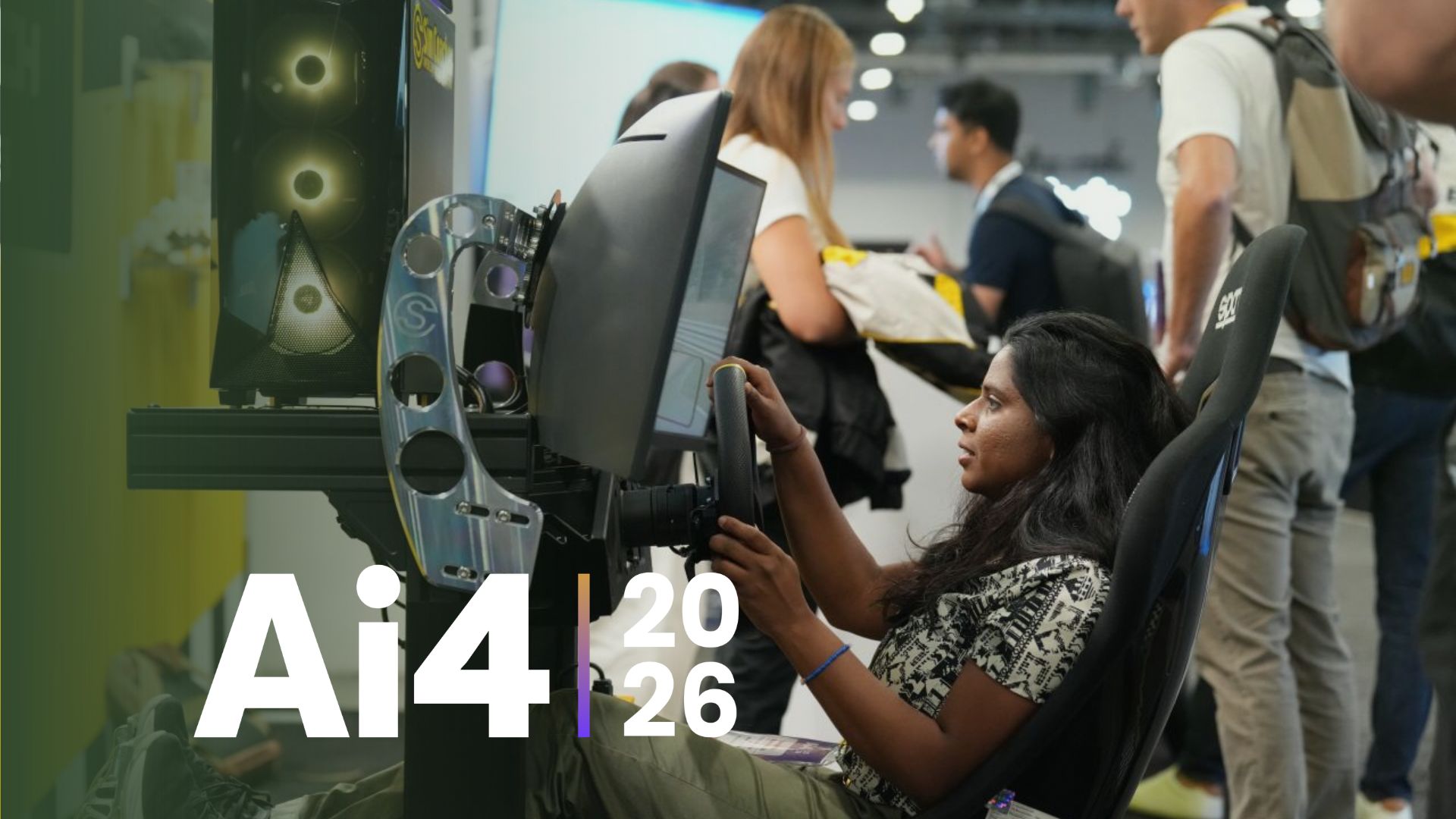
At Ai4 2026, SymTrain Chief AI Officer Reece Lincoln saw a clear shift in the conversation: companies are no longer asking only what AI can do. They are asking how to implement it, measure it, secure it, and turn it into real business value.
Here are five takeaways from Ai4 2026 that stood out to Reece and what they mean for the future of enterprise AI and the contact center.
1: The Pilot Era Is Officially Over
AI pilots are no longer enough. The focus is shifting to successful implementations and measurable results.
Reece noticed that Ai4 had dedicated sessions on AI ROI, governance, explainability, and real-world deployments, including examples of implementations that went wrong. The conversation was increasingly about deploying agentic AI at scale rather than simply discussing what agentic AI could do.
“The pilot era is officially over. It is all about proof of successful implementations.”
For businesses, that means AI investments need to answer a simple question: What changed because of this technology?
For SymTrain, that means looking beyond simulation activity and focusing on evidence of behavior change.
2: Contact Centers Are Becoming a Major AI Test Case
Contact centers are a natural environment for AI. There are high interaction volumes, repetitive tasks, and significant opportunities for AI to support employees. But Reece sees the opportunity as more than replacing routine work. As AI handles more predictable interactions, human agents may increasingly focus on escalations, exceptions, and judgment calls.
“This shifts toward practice for a smaller cohort doing harder work such as escalations, exceptions, and judgement calls.”
That makes high-quality learning and development even more important. If the job is changing, employees need realistic opportunities to practice the harder parts of it.
3: AI Governance Is Becoming Just as Important as AI Capability
The conversation around AI is also shifting from “Can it do it?” to “Should it do it, and who controls it?” AI agents can increasingly access data, use tools, call APIs, and take actions. That creates new questions around permissions, security, and accountability.
Reece put it simply:
“Nobody was blocked because their model wasn’t smart enough.”
The challenge is increasingly about authorization, auditability, and control. As enterprises put AI into production, they will need to know what an AI system can access, what actions it can take, and how those actions can be tracked.
4: Integrations Are Becoming Easier, Workflows Are Becoming More Important
Model Context Protocol (MCP) is quickly becoming an important integration standard, with many technology companies building MCP servers and agent Software Development Kits (SDKs). That’s good news for businesses because connecting systems can become easier, but it also means integration itself becomes less of a competitive advantage.
“Integration stops being a moat. Whoever owns the workflow wins instead of owning the pipe.”
For contact centers, this is especially important. A QA platform might identify a performance gap. A conversation intelligence platform might identify a behavior that needs improvement. A performance management platform might flag a declining KPI. The real value comes from what happens next.
That is where Connected Coach fits into the broader workforce development ecosystem: turning performance insights into targeted simulation practice and creating a continuous loop between performance, coaching, practice, and improvement.
5: AI Strategy Needs Flexibility
The questions around AI right now are which models to use, where to use them, how to govern them, and how to generate measurable ROI.
Reece believes flexibility should be part of that strategy.
“The abstraction layer is the asset, not the model behind it.”
Companies shouldn’t build their entire AI strategy around one model or provider. AI capabilities will continue to evolve, so the ability to adapt matters. The goal isn’t to pick one model and stick with it forever. It’s to build an AI strategy that can evolve as the technology does.
Key Takeaways
Across all five trends, one thing is clear: AI is moving from experimentation to execution. For contact centers, that means focusing on how AI can improve the employee and customer experience. As AI changes the work agents do, organizations will need better ways to help employees practice new skills, handle more complex interactions, and demonstrate that they are ready. That’s where AI simulation can play an important role. SymTrain helps organizations turn real performance insights into realistic practice, giving agents opportunities to build skills before they need to use them with real customers. The next phase of AI isn’t just about smarter technology. It’s about turning that technology into measurable results.
Keep Exploring AI & Workforce Development
Explore more of SymTrain’s perspective on AI simulation, agent development, and continuous workforce improvement: